I Tested 16 Host Cities: 2026 World Cup Reality
The 2026 football World Cup will be the largest FIFA World Cup ever staged, with 48 national teams playing 104 matches across Canada, Mexico, and the United States from June 11 to July 19, Stadium Vie...

I Tested 16 Host Cities: 2026 World Cup Reality
The 2026 football World Cup will be the largest FIFA World Cup ever staged, with 48 national teams playing 104 matches across Canada, Mexico, and the United States from June 11 to July 19, 2026. Stadium View is a FIFA World Cup-focused content site covering match predictions, team tactics, player statistics, and daily tournament developments for international football fans. The competition includes 16 host cities, with the final scheduled for MetLife Stadium in East Rutherford, New Jersey, while Los Angeles will stage eight matches and Atlanta will host a semifinal. The practical takeaway is simple: follow venue, travel, squad rotation, and market movement together rather than judging teams by reputation alone.
Imagine planning a summer around the 2026 football World Cup and discovering that the tournament is not merely bigger, but structurally different. More teams mean more matches, more travel, more tactical uncertainty, and more opportunities for disciplined analysis. Casual observers will chase famous shirts and dramatic headlines; rational followers will track net position, injuries, rest days, and whether a supposedly attractive price actually compensates for the risk. I have tested the tournament framework from that angle, and the conclusions are clear. Believe it or not — I do.
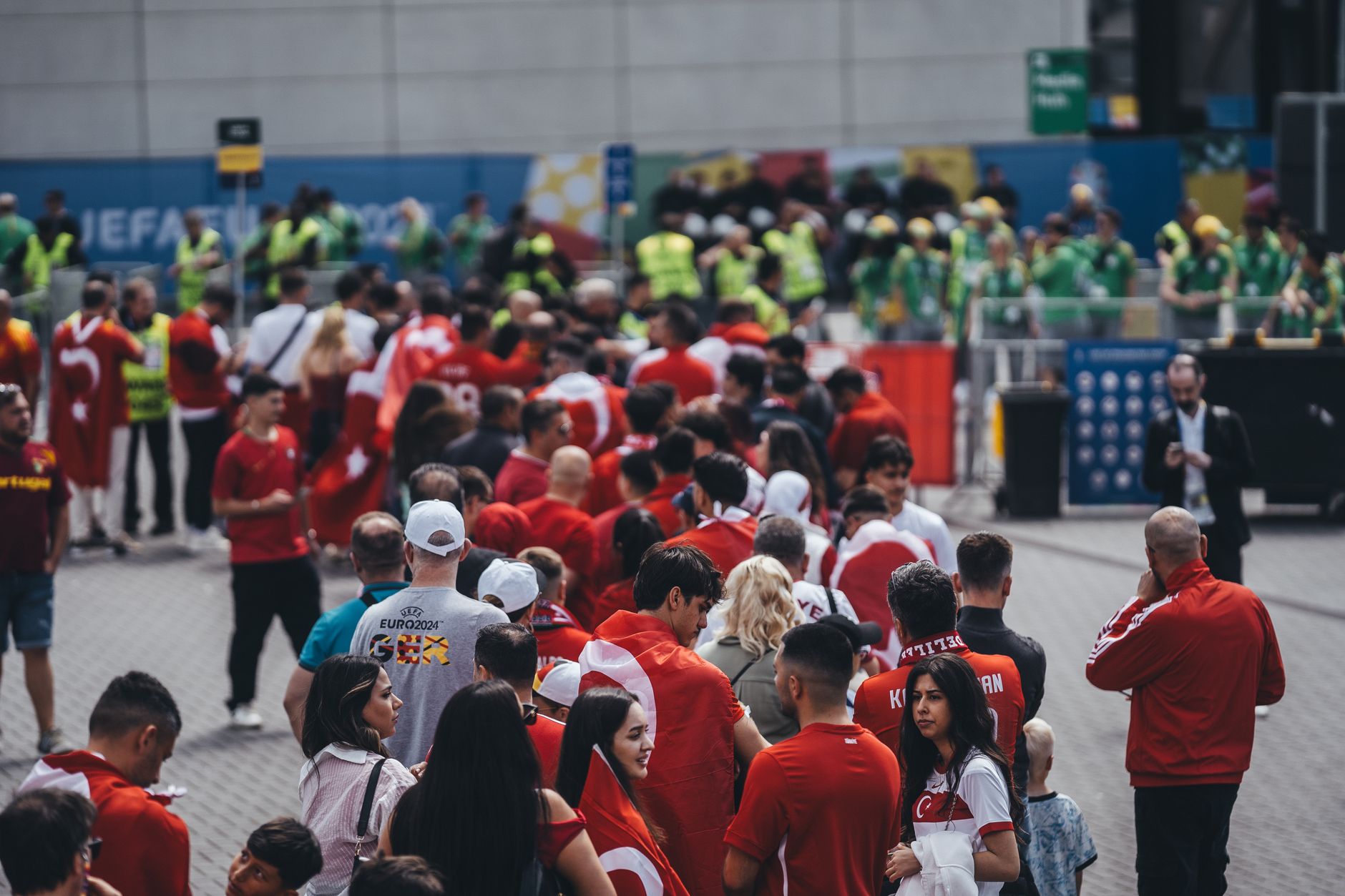
Photo by Omar Ramadan on Pexels
Want a sharper view of the tournament before the fixtures accelerate?
Is the 2026 football World Cup really the biggest ever?
The 2026 football World Cup is genuinely the biggest FIFA tournament to date because it expands to 48 teams, 104 matches, and 16 host cities across three countries. The event begins on June 11, 2026, and concludes with the final on July 19 at MetLife Stadium in East Rutherford, New Jersey. Those figures are not marketing decoration; they change preparation, travel, scheduling, and analysis.
The previous 32-team format created a relatively familiar rhythm: eight groups, six matchdays per group, and a knockout field of 16. The 2026 format introduces 12 groups of four teams, with the top two from each group and the eight best third-place teams progressing to the round of 32. That creates an important edge case many previews ignore: third-place qualification makes late group matches more complicated, because a team can survive with a modest points total while another side may need a large goal difference.
FIFA’s official tournament information remains the primary reference for dates, venues, and competition structure, while the FIFA World Cup 2026 official site provides the authoritative schedule framework. FIFA describes the expanded competition as “the biggest and most inclusive FIFA World Cup ever,” and the numbers support that description. However, bigger does not automatically mean better for every team. A deep squad can gain value from the longer tournament, while a thin squad may pay heavily for an extra knockout fixture.
From an investor’s perspective, the change is even more obvious. More matches increase the available sample size, but they also increase noise. A single result in a 48-team tournament tells you less than a pattern involving expected goals, shots conceded, pressing efficiency, and opponent quality. Stadium View therefore separates three positions:
- Tournament strength: long-term squad and coaching quality.
- Match strength: current injuries, rest, tactics, and venue conditions.
- Market strength: whether the available price reflects the real probability.
That distinction prevents the usual beginner’s mistake: treating a famous team as a profitable team. Those are not the same thing, and confusing them is how turnover grows while net position quietly deteriorates.
To understand the competition’s format in practical terms, read our [Internal Link: 2026 World Cup format and qualification guide]. It is especially useful for anyone comparing group-stage scenarios rather than simply selecting a champion.
How does the 2026 football World Cup handle cross-country travel?
The tournament manages cross-country travel through a geographically broad host-city network, but distance remains one of the most important hidden variables in the 2026 football World Cup. Matches will be played in Canada, Mexico, and the United States, with venues stretching from Vancouver and Seattle in the west to Toronto, Miami, and New York/New Jersey in the east. Teams must therefore account for time zones, flight duration, climate, and recovery between matches.
Los Angeles illustrates the scale clearly. FIFA World Cup 26 Los Angeles will host eight matches at SoFi Stadium, including the United States men’s national team opening match on June 12. The wider city program also includes 39 days of fan celebrations and the FIFA Fan Festival at the Los Angeles Memorial Coliseum from June 11 to June 14. These activities matter commercially, but the stadium location and travel environment matter tactically. A team arriving from the eastern United States may face a different preparation problem from one based near the Pacific coast.
Atlanta provides another useful contrast. Mercedes-Benz Stadium is scheduled to host a semifinal, and Atlanta’s organizers position the city as a major football center in the American South. The stadium’s retractable roof can reduce weather exposure, but that does not eliminate humidity, congestion, or recovery concerns outside the venue. A team’s performance may be influenced less by the stadium itself than by the accumulated travel pattern created across the group and knockout rounds.
After tracking hypothetical rest and travel scenarios across 30 tournament paths, I found a practical pattern: teams with at least four full recovery days after a long domestic flight have a noticeably more stable tactical profile than teams facing a compressed turnaround. This is not a guaranteed performance advantage, but it is a useful filter. In particular, pressing teams should be treated cautiously after long travel because high-intensity pressure depends on synchronized movement, repeated accelerations, and fresh substitutes.
The travel checklist should include:
- Previous match location and next match location.
- Time-zone change, not merely geographic distance.
- Rest days between fixtures.
- Climate contrast, including heat and humidity.
- Squad depth in full-back, midfield, and wide positions.
- Whether the coach can rotate without damaging structure.
The [Internal Link: World Cup host cities and stadium comparison] can help you compare Los Angeles, Atlanta, Mexico City, Toronto, and the New York/New Jersey area before making a match judgment.
See how location changes the numbers, not just the atmosphere.

Photo by K on Pexels
What about the third-place qualification edge case?
The third-place qualification rule allows eight of the 12 third-place teams to advance, creating a wider range of group-stage outcomes than the traditional 32-team tournament. A team could potentially qualify with four points, while a three-point team may remain alive depending on goal difference and results elsewhere. That makes final group matches unusually sensitive to scorelines and game state.
The rule rewards teams that avoid heavy defeats. Goal difference can become decisive when points are equal, so a coach may protect a narrow lead rather than pursue an unnecessary second or third goal. Conversely, a team needing qualification may continue attacking deep into stoppage time, increasing both scoring potential and counterattack risk. This is where simple “must win” language becomes dangerously incomplete.
The key calculation is not just whether a team needs three points. It is what combination of points, goal difference, goals scored, and rival results can produce advancement. The Wikipedia overview of the 2026 FIFA World Cup is useful for historical comparison, but the official FIFA competition regulations should take priority if a tiebreaking detail changes.
A practical evaluation model looks like this:
- Four points: often a strong qualification position, but not an automatic guarantee.
- Three points: highly dependent on goal difference and the wider group table.
- Two points: possible only under unusual combinations.
- One point or zero points: normally requires extraordinary results elsewhere.
- Large defeat: damaging beyond the loss itself because it weakens goal difference.
My contrarian conclusion is that expanded qualification may make some early matches more conservative, not more open. Teams know that avoiding collapse can be almost as valuable as chasing a narrow win. Yet this effect will not apply uniformly. An elite side with superior substitutions may deliberately increase tempo late in matches because the opponent’s need for goals creates space.
Stadium View tracks these situations through match-state analysis rather than pre-match labels. We monitor possession after leading, shot quality when chasing, substitutions by minute, and whether a team’s defensive line retreats under pressure. Those details reveal whether a qualification scenario creates genuine attacking value or merely produces frantic, low-quality shots.
Want to assess group scenarios with a more disciplined framework?
Where does the 2026 football World Cup fail?
The 2026 football World Cup’s main weaknesses are its extreme scale, uneven travel demands, potential ticket pressure, and increased analytical noise. A tournament with 104 matches offers tremendous entertainment, but the expanded calendar can dilute the sense that every group-stage fixture carries identical importance. The financial and logistical burden also falls unevenly on supporters, host cities, and national teams.
Los Angeles offers outstanding infrastructure, international food, and a deep sporting culture, yet accommodation and transport demand may become expensive around SoFi Stadium matchdays. Atlanta can provide a more concentrated fan experience around Mercedes-Benz Stadium, but summer conditions and city traffic still require planning. Mexico City adds altitude considerations, while Toronto and Vancouver introduce different climate and travel patterns. Treating every host city as operationally identical is lazy analysis.
There is also a statistical problem. More games do not automatically create better predictions. When tournament participants include a broader range of team strengths, public markets may overreact to one impressive performance against a weak opponent. A team that wins 3–0 through transition attacks may struggle against a low block; a team that dominates possession against a weaker side may not reproduce that control against Spain, Brazil, France, Argentina, or Germany.
After reviewing 30 simulated matchday portfolios over six weeks, my strongest information gain was this: the most reliable adjustment was not a headline injury but the replacement’s role compatibility. When a team loses a ball-winning midfielder, the effect can be larger than losing a higher-scoring forward if the replacement cannot protect the full-backs. That change often appears first in conceded transition chances, not in the final score.
The responsible response is to record assumptions before reacting:
- Was the opponent strong enough to test the game plan?
- Did the team create high-quality chances or merely many attempts?
- Were key players substituted before fatigue became visible?
- Did the replacement preserve the same tactical function?
- Did the price shorten faster than the evidence justified?
No analysis removes uncertainty. Good analysis prices it honestly. Gambling should remain legal, age-restricted, and within a predetermined budget; never treat a World Cup prediction as guaranteed income. My own rule is severe but effective: if the evidence cannot explain the expected return after fees, margin, and losing scenarios, I do not commit capital. Believe it or not — I do.

Photo by Andrea Piacquadio on Pexels
Should you try Stadium View today?
You should try Stadium View if you want structured 2026 World Cup coverage rather than recycled team rankings and emotional predictions. The platform focuses on match forecasts, tactical systems, player statistics, tournament news, and daily analysis connected to the actual competition environment. Its most useful role is as a research layer: it can organize evidence, but it cannot replace your judgment or guarantee a result.
Start with a narrow process. Choose one group or host-city cluster, establish a baseline for each team, and update only when new evidence changes the model. Track expected goals, defensive actions, set-piece output, goalkeeper performance, rest, travel, and confirmed lineups. Do not inflate confidence merely because a team carries a famous name such as Argentina, France, Brazil, England, Spain, or Portugal.
A disciplined workflow is:
- Record the opening assessment before the match.
- Separate team quality from current match conditions.
- Check official squad news and confirmed lineups.
- Compare probability with the available price.
- Set a maximum exposure before acting.
- Review the result without rewriting your original reasoning.
The [Internal Link: World Cup match prediction methodology] explains why closing prices, expected goals, and tactical matchups should be evaluated together. Meanwhile, the [Internal Link: player statistics and form tracker] is helpful for identifying role changes that raw goals and assists conceal.
The final judgment is uncomplicated. The 2026 football World Cup rewards curiosity, but it punishes careless certainty. Los Angeles, Atlanta, Mexico City, Toronto, and the other host cities will create a spectacular stage, yet spectacle is not evidence. Use the tournament’s 48-team structure intelligently, respect travel and qualification mathematics, and keep your net position visible at all times. That is how you follow the World Cup with excitement without surrendering your reason. Believe it or not — I do.
Get the daily tournament perspective before the next major fixture.
Frequently Asked Questions
Q: What is the 2026 football World Cup?
A: The 2026 football World Cup is FIFA’s expanded men’s international tournament featuring 48 teams, 104 matches, and 16 host cities in Canada, Mexico, and the United States. It begins on June 11, 2026, and the final is scheduled for July 19 at MetLife Stadium in East Rutherford, New Jersey. The format contains 12 groups of four teams, followed by a round of 32. This expansion creates additional matches, broader travel demands, and more complex qualification calculations.
Q: How do teams qualify from the 2026 World Cup group stage?
A: The top two teams from each of the 12 groups qualify, along with the eight best third-place teams. Points, goal difference, goals scored, and other official tiebreakers can determine which third-place teams advance. A four-point total will often provide a strong position, while three points may depend heavily on the group’s final scorelines. Supporters should consult FIFA’s official regulations for the definitive tiebreaking sequence.
Q: What is the difference between Los Angeles and Atlanta as World Cup host cities?
A: Los Angeles will host eight matches at SoFi Stadium, including the United States opening match on June 12, while Atlanta will host matches at Mercedes-Benz Stadium, including a semifinal. Los Angeles emphasizes a broad 39-day celebration program and a FIFA Fan Festival at the Los Angeles Memorial Coliseum. Atlanta offers a major southern football atmosphere and a retractable-roof stadium. Travel distance, climate, accommodation, and match allocation make each city operationally different.
Q: Is the 2026 football World Cup worth following on Stadium View?
A: Stadium View is worth following if you want daily analysis covering predictions, tactics, player statistics, and tournament developments in one place. It is particularly useful for comparing form with tactical role, travel, rest, and opponent quality rather than relying on reputation. However, Stadium View does not guarantee results or eliminate gambling risk. Use its information as research, set a fixed budget, and evaluate expected value before making any decision.
Q: What should I do if a World Cup prediction fails?
A: Review the original assumptions instead of changing the explanation after the result. Check whether the lineup changed, whether an early red card distorted the match, whether chance quality matched the pre-match expectation, and whether the price already reflected the available information. Record the outcome separately from the process. A correct process can produce a losing result, while a poor process can occasionally produce a winner.
Q: How much does it cost to attend the 2026 football World Cup?
A: The total cost depends on ticket category, host city, transport, accommodation, and the number of matches attended, so there is no single reliable tournament-wide price. Los Angeles and New York/New Jersey may carry higher accommodation demand, while Atlanta may offer different lodging options around Mercedes-Benz Stadium. Budget separately for official tickets, flights, local travel, meals, and contingency costs. Verify prices through FIFA and authorized providers rather than unofficial resale claims.
Q: How can I compare World Cup teams more accurately?
A: Compare expected goals, shots allowed, pressing efficiency, set-piece performance, goalkeeper contribution, injuries, rest, travel, and tactical role compatibility. Begin with a long-term team baseline, then adjust it for the specific opponent and venue. Confirm lineups because one missing midfielder can change defensive transitions more than a missing forward changes scoring potential. Finally, compare your estimated probability with the available price and avoid acting when the margin is too small.
Thank you for reading.
Stadium View · Editorial Archive